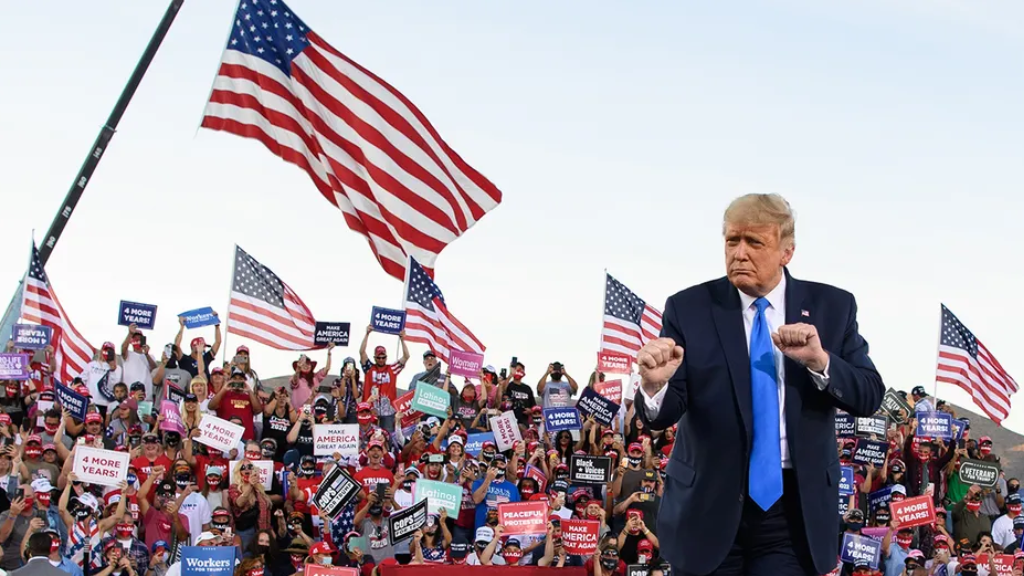
We are nearing the one year anniversary of President Donald Trump’s Inauguration. And, well, there are a lot of mixed feelings about it throughout the country. Less than a year into his term, he has issued 221 executive orders. This is more than he (in his first term) or ANY president has issued since Jimmy Carter almost half a century ago. Love the guy or hate him, it’s difficult to deny that he’s got the need, the need for speed! For most people whose eyes aren’t glued to the news, it’s difficult to keep up with this speedy/reckless/hasty/productive/consequentialist administration.
Below is a brief and surface level list of the 5 (not in order) most consequential actions taken during his first year back in office.
1: Declaring a National Emergency at the Southern Border
In 2016, we might remember a few of Trump’s most popular campaign slogans: “Make America great again!”, “Drain the swamp!”, and “Build the wall!”. During his first term, he received criticism for his inability to follow through with building the wall, and we ended up with something that looked less like the Great Wall of China, and more like, as Nancy Pelosi put it, “fencing”. So this time around Trump came out ambitious. His first day in office he called a National Emergency at the Southern Border, which unlocked emergency authorities, expanded federal enforcement capacity, and reframed immigration as a security crisis. This was a HUGE move on his part because calling a national emergency enabled him to access emergency funding without new congressional approval.
Here are some different perspectives that have come from this event:
- “America’s sovereignty is under attack… This assault on the American people and the integrity of America’s sovereign borders represents a grave threat to our Nation.”” whitehouse.gov
- “The fact that [the president] was able to wait for so long is convincing evidence that the situation at the southwest border was never an emergency.” Economic Policy Institute
- “The mental health struggles faced by those who serve on the front lines of border enforcement … are disproportionately high, yet their stories are absent from conversations about the human cost of border policies.” nnirr.org
2: Major Drug Policy Shifts
This, you may have seen in the news lately. Because much like the orchestra’s 23 minute medley, ‘it has never been done before’. Unlike immigration, where Trump doubled down on enforcement, his approach to drug policy was surprisingly split down the middle. On one hand, his administration pushed to loosen federal restrictions on marijuana, directing agencies to reconsider its classification after decades of treating it as a substance with no accepted medical use. On the other, Trump labeled fentanyl a national security threat, framing the opioid crisis not as a public health failure, but as an act of war. This matters because drug policy dictates who gets jailed, who gets treatment, and who gets a second chance. For marijuana users, the shift signaled a softening of the federal government’s stance. For communities ravaged by fentanyl, it meant harsher enforcement and broader policing powers. In the same year, Trump managed to both step away from the traditional War on Drugs— and quietly revive it.
Here are some different perspectives that have come from this event:
- “Fentanyl is the deadliest drug threat that our country has ever faced.” oversight.house.gov
- “Americans overwhelmingly support marijuana legalization… yet there are more than 400,000 arrests a year for possession of marijuana, needlessly entangling people in the criminal legal system.” aclu.org
- “I’m inclined to push back against the hijacking of terms [WMD] that have a specific meaning just to harness the emotional impact.” statnews.com
3: Deportations and ICE
Few have not seen the viral and controversial edits of deportation arrests on the official Tiktok page of The White House. Following the national emergency declaration and new DHS directives, the Trump administration expanded deportation efforts, both at the border and inside the United States. The expanded deportation strategy under the Trump administration included unprecedented international removals and cases affecting students and long-term residents. In March 2025, nearly 300 migrants —mostly Venezuelans with no criminal convictions— were flown to El Salvador’s CECOT prison under a controversial agreement despite a federal judge’s temporary order, raising due-process and human-rights concerns over conditions there. Interior immigration enforcement also reached into everyday life in the U.S.; high-profile detentions included international students such as Mohsen Mahdawi and Rümeysa Öztürk, whose cases drew national attention. Data from fiscal year 2025 suggest ICE removals from interior communities outpaced border deportations for the first time in over a decade, with roughly 400,000 deportations recorded in the first 250 days and projections nearing 600,000 by year’s end. migrationpolicy.org
Here are some perspectives on the issue:
- “If you come here and break our laws… we will find you and deport you. You will never return.” – Kristi Noem dhs.gov
- “You have to work together … and when you come to America, you’ve got to do things legally and behave like a guest.” — Arnold Schwarzenegger ew.com
- “There’s a difference between heroes and systems that forget people are human … when kids get caught in the middle, when holidays turn into trauma — that’s not safe.” people.com
4: The Economy
It’s the economy, stupid! In his first year back in office, President Trump pursued an economic agenda centered on tariffs, domestic production, and energy expansion, producing uneven effects across the economy. While consumers faced rising prices for certain goods, particularly food, gas prices fell to some of their lowest levels in recent years, complicating the overall economic picture. Tariffs raised costs for imported meat, animal feed, and farming equipment, contributing to higher grocery prices. I mean seriously — I went out for a hamburger recently and it was like 20 bucks. You know the iconic Costco $1.50 hot dog? They’re actually running their cafeteria at a LOSS due to an adamant consensus from their customers to not raise prices. On the other end of the stick, gas prices across the U.S. fell to multi-year lows in 2025, with the national average dipping below $3.00 per gallon in December — the lowest holiday-season average in more than four years.
Here are some quotes from interviewing Americans on the economy:
- “Trump’s killing us on grocery prices,” https://www.reuters.com
- “I can’t say it’s an affordability hoax, because I agree the prices were too high.” –DJT https://www.ft.com
- “There’s nothing the president has a magic wand on.” https://www.reuters.com
5: Cultural and Civil Rights Policy
Trump’s first year back in office also brought significant shifts in cultural and civil rights policy, reigniting national debates over gender, education, and the role of the federal government. The administration moved to redefine federal standards around gender identity, limit gender-affirming care for minors, and reshape how civil rights laws are enforced in schools and healthcare. Supporters framed the changes as necessary protections for children and parental rights, while critics argued they restricted access to care and narrowed civil rights protections. Unlike economic or trade policy, these changes directly affected schools, hospitals, and families, making cultural policy one of the most personally felt aspects of the administration’s agenda.
Here are some representatives who have been affected by Trump’s policy changes:
- “It is deeply unfair to play politics with people’s lives and strip transgender young people, their families and their providers of the freedom to make necessary health care decisions.” https://www.hrc.org
- “This restores common sense and puts parents back in charge of their children’s education.” https://www.heritage.org
- “I just want to learn without fear or discrimination.” williamsinstitute.law.ucla.edu/
As Trump enters the remainder of his term, much of his agenda now rests in the hands of courts, Congress, and voters. Several of his most consequential actions face legal challenges, while others depend on economic conditions beyond any administration’s control. Thank you for reading!