

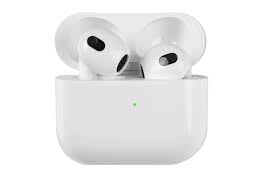
As an avid music listener whose device of choice is AirPods, I recoil from accusations that they could pose higher hearing risks than other headphones. Approximately 70% of teenagers own AirPods, and they are one of Apple’s most popular products. It’s not uncommon to see them in the hallways of WT. So, how dangerous are they, really?
Among vast concerns, including doubted ones of electrostatic shock and cancer risk, the most viable one is hearing damage and loss. AirPods are unable to provide the same noise insulation as headphones or wired earbuds, making them more dangerous to hearing. AirPods sit next to your ear canal, but not quite in it, which means that they can’t block outside noise, like music playing on a bus or someone’s conversation. To combat this, AirPod users tend to turn the volume up higher than would otherwise be necessary, which can wreak havoc on hearing. Multiple studies show that music-listeners turn the volume up louder when using earbuds in the style of AirPods than when using an alternative, like over-ear headphones.
Audiologists estimate that people tend to listen to music in their earbuds at a volume 13 decibels higher than the background noise. To put this in perspective, airplanes typically reach 80 decibels. To account for this, an AirPod user might turn their music up, typically to about 13 decibels more than 80 decibels, reaching about 93 decibels. Most experts agree that over 90 decibels is dangerous over a two hour time period, which is encompassed in most flight times.
Another troubling example is the New York subway platform or train, which is, on average, 94 decibels. Going with the 13 decibel estimation, AirPod users would listen at a volume of 107 decibels. For decibel levels over 100, the safe exposure time is 15 minutes a day, a time shorter than many subway stays.
People are in scenarios like this all the time, and the effects are starting to present themselves. The American Osteopathic Association has reported that an estimated 20% (1 in 5) teenagers have some form of hearing damage. This rate has risen 30% in the last 20 years. Similarly, the World Health Organization estimates that more than 1 billion people between 12 and 35 years old risk losing their hearing by listening to music too loudly.
A solution to the hearing damage posed by wireless earbuds is purchasing over-ear noise cancelling headphones that don’t require you to turn volume up excessively to drown out outside noise. These safer headphones can be expensive, but certainly not more expensive than remedying damaged hearing.