


Think of some of the most critically acclaimed movies of all time. Titles like 2001: A Space Odyssey, Interstellar, Star Wars (the original trilogy), Alien, and Wall-E may come to mind. What do they share in common? They take place in space.
This past weekend, I saw the newest addition to this roster of spectacular films, Project Hail Mary. I was intrigued when I saw the trailer months ago because I was slightly familiar with Andy Weir’s novel, which it was adapted from, and it had Ryan Gosling in it, one of the most versatile and likable actors in Hollywood. But upon release, it really started to grab my attention because I was immediately hearing comparisons to Christopher Nolan’s Interstellar. Interstellar may be the most captivating film that I have ever seen, and it will surely go down as one of the best I have watched in my lifetime, so I was skeptical that it could compete with Nolan’s masterpiece. I thought it might just be a naive comparison because they both take place in space. Upon watching Project Hail Mary, though, I understand it now. The movie is phenomenal, emotionally riveting, and exudes pure beauty. To compare it immediately to Interstellar would be a disservice to the movie itself, because its quality should be appreciated on its own. But yes, comparisons will eventually come, whether it’s to Interstellar, 2001, The Martian, Arrival, etc. And when I was listing all these films centered on space fiction, I asked myself: Why do I love these movies?
To start with, I believe that film is the ultimate arrangement of artistic expression. It integrates all forms of art, whether it be music, photography, literature, theatre, or visual effects. I also much prefer film to television. The brevity of a movie strikes a chord in me that a long series cannot. Something about your worldview being flipped upside down within two hours is something that months of consuming a series cannot replicate. But to get back to the question: why space movies?
Well, it could be because space is something we are unfamiliar with. Sure, everyone knows about our solar system and that Earth is in the Milky Way galaxy, but after that, your average person knows very little about what lies beyond. But even once you do try to understand space, it only makes the concept harder to wrap your head around. When it comes to the universe, you and I are seemingly insignificant. We are these infinitesimally small dots on an infinitely large canvas. So when we see the world this way, it is easy to wonder if we really matter. And that’s where I think movies like Project Hail Mary and Interstellar impact viewers extraordinarily.
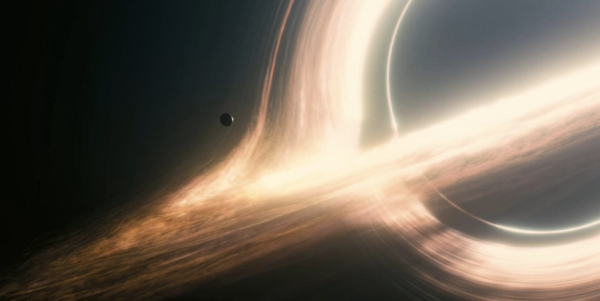
Without spoiling the films completely–although if you haven’t watched either, stop reading this article and watch them now–they shine in their thematic exploration of what it means to be human. Interstellar focuses on the strength of human will, fate, and love. Project Hail Mary builds its story around friendship and the act of being brave. In both films, these traits end up saving the human race, but I don’t believe that was the primary goal of the filmmakers. It is these traits that make us human. It is these traits that make us matter.
It is in W.H. Auden’s poem “The More Loving One” where he says, “How should we like it were stars to burn / With a passion for us we could not return? / If equally affection cannot be, / Let the more loving one be me.” The universe cannot replicate emotion as we do, as it is love that separates us from other matter floating around.
What these two films teach us is that our sentiment knows no bounds. Even if we are stranded light-years away from home, we will still love, we will still desire, we will still sacrifice, we will still be human. They were not designed to help us understand the universe; they were designed to help us better understand ourselves. That is why we love them.